
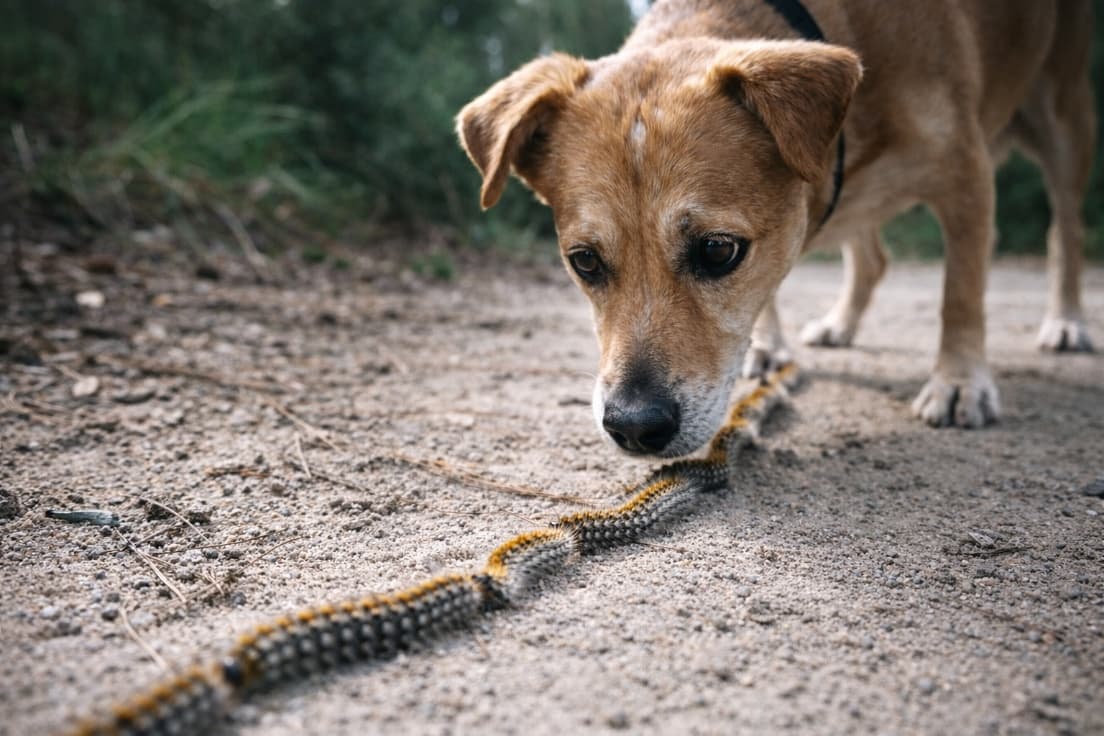
With the arrival of spring, one of the greatest dangers for dogs during walks appears: the pine processionary caterpillar. Every year many owners seek urgent information because their pets have had contact with these caterpillars.
Knowing how to identify the processionary, recognizing the symptoms and acting quickly can make a big difference in your dog’s health.
In this article we explain what is the processionary, why it is dangerous for dogs and how to protect your pet during spring walks.
What is the pine processionary?
The pine processionary is a caterpillar that usually appears in the late winter and spring months, especially in areas with pine trees and natural parks.
It gets its name because these caterpillars move in a line, forming long processions on the ground. During this stage they descend from the trees to bury themselves and complete their life cycle.
The problem is that their bodies are covered with thousands of microscopic stinging hairs, which release a toxin that is highly irritating to both animals and humans.
That is why it is so important to keep dogs away from them.
Why is the processionary plant dangerous for dogs?
Dogs are often attracted to caterpillars because they move and attract their attention during walks. Many try to sniff them, touch them or even pick them up with their mouths.
When this occurs, the stinging hairs of the processionary processionaries release toxins that can cause very serious reactions in a matter of minutes.
The most affected areas are usually:
- the language
- the snout
- the legs
- the eyes
In severe cases, contact with the processionary can cause intense inflammation, necrosis of the tongue and even respiratory distress, so it should always be considered a veterinary emergency.
Symptoms if a dog touches a processionary plant
Symptoms usually appear very quickly, sometimes within minutes after contact.
Some of the most frequent signs are:
- excessive salivation
- inflammation of the muzzle or tongue
- very red or swollen tongue
- constant attempt to scratch your mouth
- vomiting
- difficulty in breathing
- apathy or pain
In some cases the tongue may change color or start to become damaged, indicating that the reaction is progressing rapidly.
In the event of any of these symptoms, it is essential to act quickly.
What to do immediately if your dog touches a processionary plant
If you suspect that your dog has had contact with a processionary, you should act as soon as possible.
1. Prevent him from continuing to touch the caterpillar.
The first thing to do is to move the dog away from the area to avoid further contact with the stinging hairs.
2. Wash the affected area
If possible, gently wash the mouth or paws with plenty of warm water, without rubbing. Rubbing may release even more toxin.
3. Do not directly manipulate the area
Avoid touching the tongue or irritated area with unprotected hands.
4. Go immediately to the veterinarian
The most important step is to take the dog to the veterinarian as soon as possible, as it will need professional treatment.
The sooner action is taken, the lower the risk of complications.
How to avoid the processionary moth during spring walks
During the spring months it is advisable to take extreme precautions, especially in areas where there are pine trees.
Some useful tips are:
- avoid areas with pines during the processionary pine season.
- keeping the dog under control during walks
- pay attention to the soil in parks and trails
- avoid sniffing out rows of caterpillars
It is also advisable to inquire about areas where processionaries have been detected recently.
Tips to protect your dog in spring
Spring is a fantastic time to enjoy outdoor walks with your pet, but it also requires attention to certain natural hazards.
To protect your dog you can:
- monitor the places where he walks
- check their paws and muzzle after every ride
- maintaining a balanced diet that promotes their overall well-being
A quality, natural diet helps dogs maintain their energy and immune system in good condition, especially during times of increased outdoor activity.
In Gespetfood we work with products designed for the welfare of your pet, made with quality ingredients and adapted to the needs of dogs.
👉 Discover our selection of natural food and snacks for dogs at
www.gespetfood.com
Enjoy spring with your dog in a safe way
The processionary is one of the most well-known dangers for dogs during the spring, but with information and caution it is possible to greatly reduce the risk during walks.
Being vigilant, recognizing the symptoms and acting quickly can help protect your pet’s health.
And remember: a good diet, proper care and regular check-ups are essential for your dog to enjoy every season of the year with health and energy.