
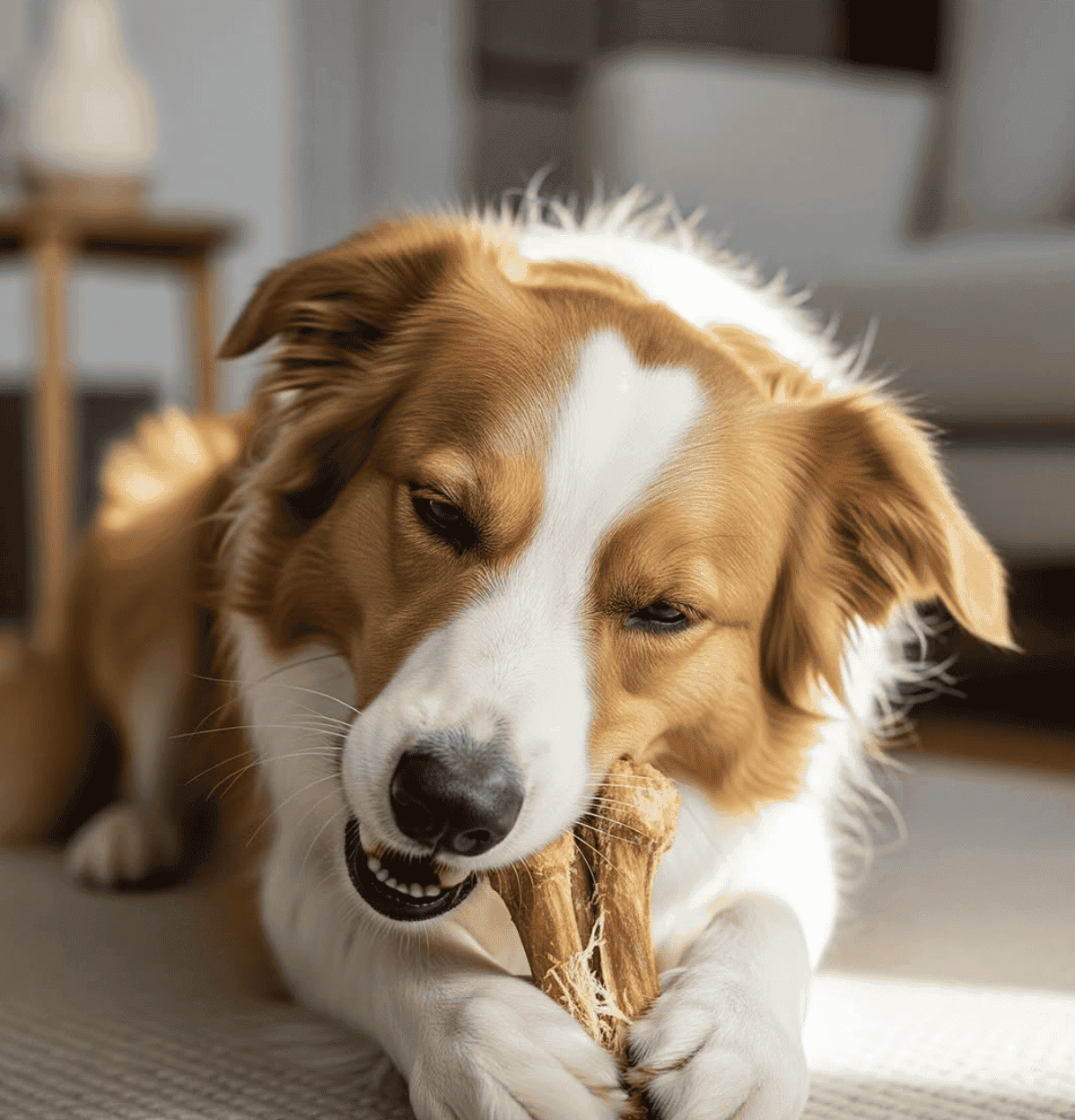
More and more dog owners are looking for a more natural diet for their dogs. As part of this trend, natural dog bones have become one of the most popular snacks, but also one of the products that raise the most questions.
Are they really safe? Can all dogs eat them? What are their benefits?
In this article, we’ll answer all these questions so you can choose the best bone for your four-legged friend and help them enjoy it in a healthy and safe way.
Why do dogs love to chew?
Chewing is a natural part of any dog’s behavior.
From the time they are puppies, they explore the world with their mouths, and even as adults, chewing remains a physical and mental necessity.
When a dog chews:
- It relieves stress and anxiety.
- He stays entertained for longer.
- Avoid destructive behavior at home.
- Strengthens the jaw.
- It promotes the natural cleaning of teeth.
That’s why offering the right snack isn’t just a treat—it’s also a way to improve their daily well-being.
Benefits of Natural Bones for Dogs
1. They help maintain good dental health
One of the biggest benefits of natural bones for dogs is that they help reduce the buildup of plaque and tartar.
As they chew, the friction removes some of the plaque buildup on their teeth, promoting better oral hygiene and reducing bad breath.
Although they don’t replace brushing, they’re an excellent way to help keep your mouth cleaner.
2. They reduce stress and boredom
Many dogs become anxious when they spend several hours alone or have little stimulation.
Long-lasting natural snacks help keep them occupied, reducing stress and preventing behaviors such as chewing on furniture, shoes, or cushions.
A dog that is kept entertained is usually a calmer, more well-adjusted dog.
3. They are a source of entertainment
Unlike other treats that are gone in a matter of seconds, natural bones can keep a dog entertained for quite a while.
This makes them an excellent choice for:
- Rainy days.
- Moments of relaxation at home.
- After the walk.
- Long trips.
4. They promote natural chewing
Chewing strengthens the jaw muscles and satisfies an instinct that all dogs have.
That’s why veterinarians and dog trainers often recommend providing safe alternatives so that dogs can express this behavior in a healthy way.
Are all bones the same?
No.
One of the most common mistakes is thinking that any bone will do.
Cooked bones can splinter easily and cause injuries to the mouth or digestive tract.
That is why it is always recommended to choose natural bones specifically prepared for dogs, which have been selected and treated to ensure safe chewing.
How do you choose the right bone?
Every dog has different needs.
When choosing a bone, it’s a good idea to keep the following in mind:
Size
The bone should be proportional to the dog’s size.
One that’s too small could be accidentally swallowed.
One that’s too big can be uncomfortable.
Bite force
A Chihuahua doesn’t chew the same way a German Shepherd does.
Dogs with more energy need tougher treats.
Age
Puppies need products designed for their developing teeth.
Older dogs may benefit from softer food options.
How often can they eat natural bones?
It depends on the dog’s size and the type of treat.
As a general rule:
- Two or three times a week is usually a good frequency.
- Always under supervision.
- With fresh water available.
What mistakes should you avoid?
Even though they are natural, it’s a good idea to follow these recommendations:
❌ Do not feed cooked bones.
❌ Choosing a size that’s too small.
❌ Leaving the dog unattended for hours.
❌ Do not remove the bone once it has become too small.
What are the advantages of natural snacks over ultra-processed treats?
Many store-bought snacks contain:
- Food coloring.
- Preservatives.
- Added sugars.
- Artificial flavors.
In contrast, natural dog treats stand out for their simple, less-processed ingredients, making them an increasingly popular choice among those seeking higher-quality food for their pets.
Choosing natural products can contribute to your dog’s well-being and fit better into a balanced diet.
How do you introduce a natural bone for the first time?
If this is your dog’s first time trying one:
- Choose an appropriate size.
- Offer it to him after the walk.
- Let him enjoy it while you keep an eye on him.
- Remove it when it gets too small.
That way, you can get used to it little by little.
Where can I buy natural bones for dogs?
Not all products are of the same quality.
It’s important to choose snacks made specifically for dogs, with ingredients that are carefully selected and tailored to their needs.
At Gespetfood, you’ll find a wide selection of natural bones and dog treats, perfect for promoting your pet’s chewing, entertainment, and well-being.
👉 Check out our collection and find the perfect snack for your pet.
Frequently Asked Questions (FAQ)
Do natural bones clean your teeth?
Yes. Chewing helps reduce some of the accumulated plaque and tartar, promoting better oral hygiene.
Can they eat bones every day?
It depends on the type of treat and the dog’s size, although it’s generally recommended to give them treats several times a week and always under supervision.
Which bone is best for a small dog?
The bone should be the right size for your dog so that it can chew on it comfortably without the risk of swallowing it whole.
Can puppies eat natural bones?
Yes, as long as the products are appropriate for their age and stage of development.
Conclusion
Natural dog bones are much more than just a treat. They help maintain dental health, encourage chewing, reduce stress, and provide healthy entertainment.
Of course, it’s essential to choose a product suited to each dog’s size and needs and to always offer it responsibly.
At Gespetfood, we’re committed to providing high-quality, natural snacks so your pet can enjoy a healthier diet and fun moments while taking care of its well-being.