
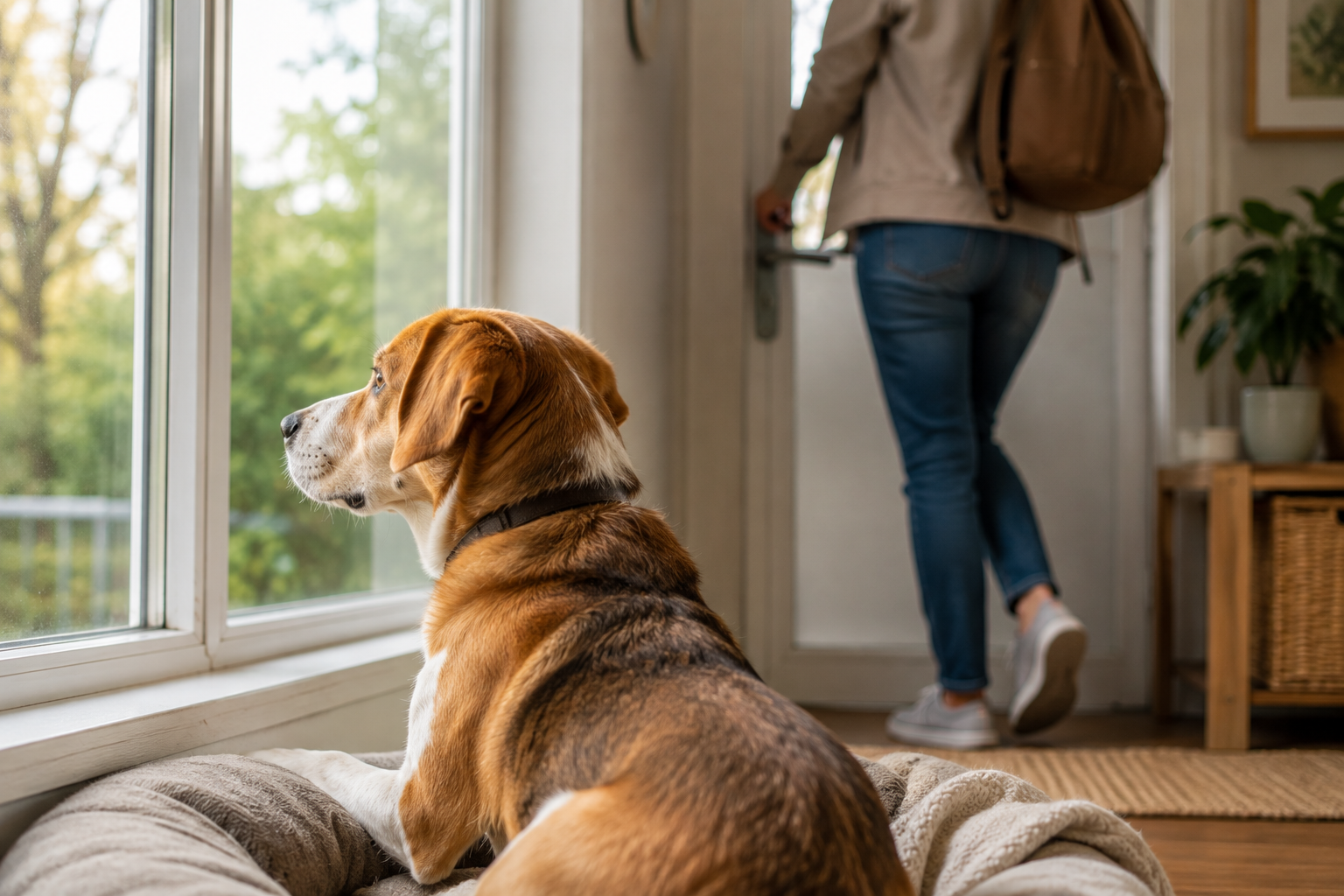
After weeks of enjoying extra time together, September arrives and brings a return to work. For us, it means picking up schedules, meetings, and obligations. For our dogs, it can mean something very different: spending several hours alone at home again.
If you spent more time with your dog during the holidays, it is completely normal for this change in routine to be noticeable. Preparing for this transition can help make the return to work much smoother for everyone.
Why Do Dogs Struggle When Left Alone Again?
During the holidays, many things change:
- We spend more time at home.
- Walks are more frequent.
- Schedules shift.
- We interact with our dogs much more.
- We do more activities together.
When all of this suddenly disappears, some dogs may show signs of discomfort. However, we must distinguish between a normal difficulty in adapting and true separation anxiety.
How to Tell If Your Dog Is Struggling with Loneliness
Common behaviors that indicate a dog is having trouble managing alone time include:
- Persistent barking or howling
- Object destruction
- Escape attempts
- Indoor accidents despite proper house-training
- Intense restlessness
- Repetitive behaviors
- Excessive drooling
- Constant vocalization
Note: If these behaviors appear intensely or repeatedly, it is best to consult a veterinarian or a professional specialized in canine behavior.
5 Tips to Prepare Your Dog for the Return to Work
1. Start Before You Go Back
If you are still wrapping up your time off, do not wait until your very first day back at work to test how your dog reacts. Start taking short, brief outings. The goal is not to leave them alone for hours suddenly, but to progressively reintroduce those moments of separation.
2. Maintain a Predictable Routine
Schedules do not have to be identical every single day, but having a consistent structure helps. For example: Walk $\rightarrow$ Food $\rightarrow$ Rest $\rightarrow$ Alone Time $\rightarrow$ Walk $\rightarrow$ Interaction. A predictable routine allows your dog to better anticipate what will happen next.
3. Provide a Good Walk Before Leaving
An adequate outing before you leave gives your dog the chance to walk, explore, and sniff. It is not just about “tiring them out”—it is about offering physical and mental activity tailored to their needs.
4. Leave Appropriate Enrichment Activities
Before heading out, you can provide safe toys or enrichment activities. Sniffing games are especially engaging because they tap into one of a dog’s most important senses. You can also use treats as part of these activities (like hiding small rewards in a puzzle toy) to turn staying home alone into a fun pastime. Always use safe, appropriate toys and supervise your dog initially.
5. Avoid Overly Intense Goodbyes and Reunions
As hard as it is not to get emotional after being apart for hours, maintaining a sense of normalcy helps. Entering and leaving the house should become a normal, uneventful part of the daily routine.
Frequently Asked Questions
Can I give my dog a treat before leaving?
Yes, a treat can be part of a positive routine as long as it is safe and appropriate for your dog. You can use it inside a sniffing game or as a reward after an activity. Natural snacks are a great way to incorporate small rewards. However, remember that a treat is not a treatment for separation anxiety. If your dog suffers from anxiety, you must work on the root cause with professional guidance.
How long can a dog stay home alone?
There is no single number of hours that fits every dog. Factors like age, health, elimination needs, activity level, personality, and routine all play a role. Puppies, senior dogs, and healthy adults have very different needs. If you will be out for many hours, consider alternatives such as a dog walker, pet sitter, family member, or doggy daycare.
Quality Time Matters More Than Quantity
Returning to work does not mean a lower quality of life for your pet. Even with less time in September, we can make the moments we share count:
- A quiet sniffing walk
- Five minutes of training
- A fun search game
- A moment of cuddles
- A natural treat after an activity
You do not always need hours to create great moments. The most important thing is ensuring your dog’s physical, mental, and social needs continue to be met.
Returning to the routine is also about learning to enjoy the little moments. Work might change our schedules, but it doesn’t have to eliminate those small rituals we share with our dogs—because to them, those five minutes of play after coming home or that afternoon walk are the best part of the day.