
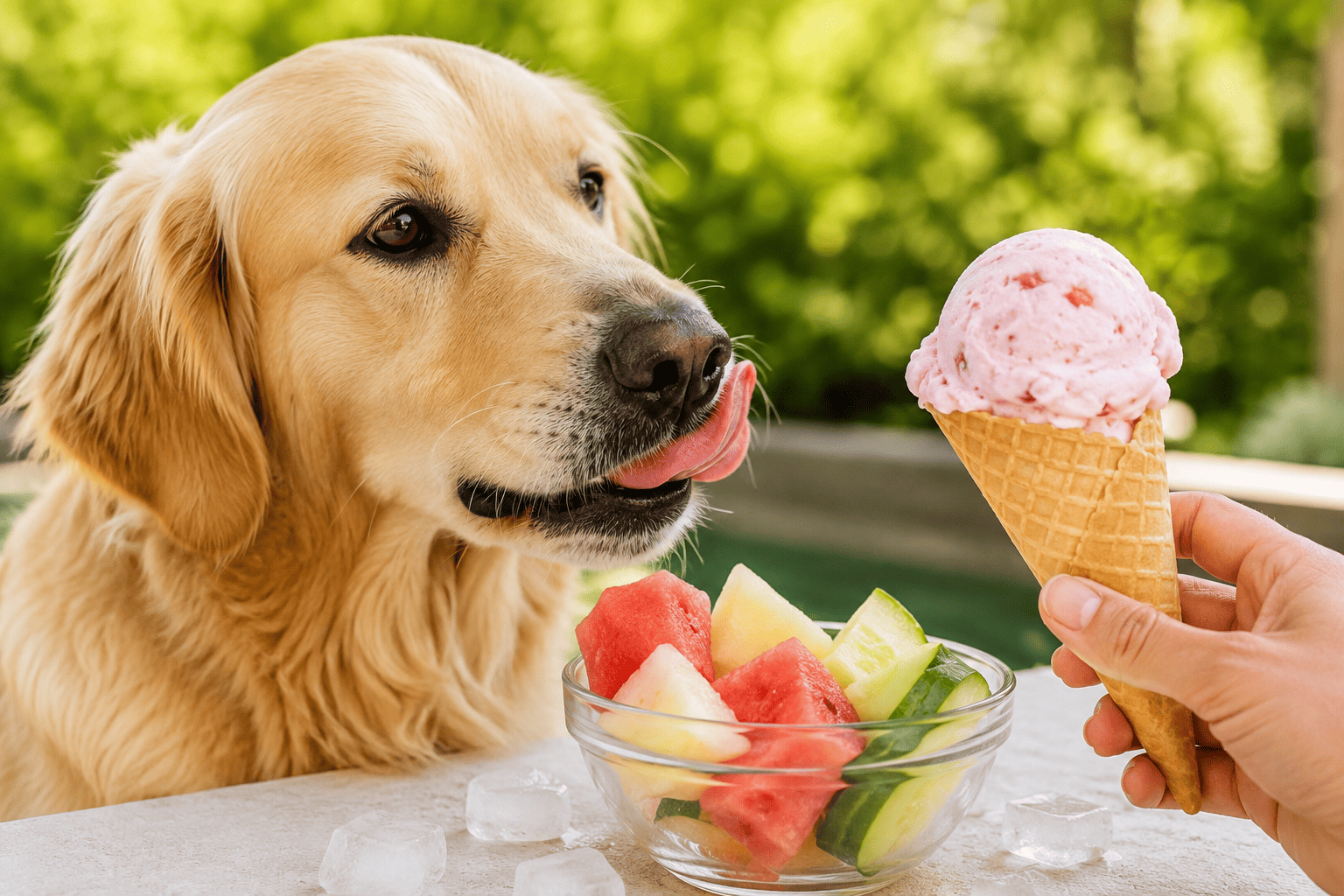
When summer arrives and temperatures start to rise, it’s natural to reach for a refreshing ice cream. Many dog owners end up asking the same question: can dogs eat ice cream?
Although it may seem like a harmless treat, the truth is that most ice creams made for humans are not suitable for dogs. Some contain ingredients that can cause digestive issues and may even be harmful to their health.
In this article, you’ll learn why sharing your ice cream isn’t recommended, what refreshing foods are safe for dogs, and how to keep your pet hydrated during the hottest months of the year.
Can Dogs Eat Ice Cream?
The short answer is: it depends on the type of ice cream, but in most cases, it’s not recommended.
Commercial ice creams are designed for humans, not for a dog’s nutritional needs. Many contain ingredients that dogs struggle to digest or that can even be toxic.
Common ingredients include:
- High amounts of sugar
- Milk and cream
- Chocolate
- Artificial sweeteners
- Artificial flavors
- Preservatives
While a small amount may not cause serious harm in a healthy dog, making ice cream a regular treat can lead to digestive issues and contribute to weight gain.
Which Ice Cream Ingredients Are Dangerous for Dogs?
Chocolate
Chocolate contains theobromine, a substance that is toxic to dogs.
Even small amounts can cause:
- Vomiting
- Diarrhea
- Nervousness
- Tremors
- Increased heart rate
- Seizures in severe cases
Xylitol
Some “sugar-free” ice creams use xylitol as a sweetener.
This ingredient is extremely toxic to dogs and can cause a rapid drop in blood sugar and even liver failure.
Never give your dog anything that contains xylitol.
Lactose
Many adult dogs are lactose intolerant.
After eating ice cream, they may experience:
- Gas
- Diarrhea
- Abdominal pain
- Bloating
Even if not all dogs react the same way, it’s a risk best avoided.
Excess Sugar
Regular sugar consumption can lead to:
- Obesity
- Diabetes
- Dental disease
- Inflammation
Excess calories can also negatively impact less active dogs.
Are There Ice Creams for Dogs?
Yes.
There are now ice creams specifically formulated for dogs, made with safe ingredients and adapted to their nutritional needs.
However, always check the label before buying to ensure they do not contain:
- Chocolate
- Caffeine
- Xylitol
- Grapes or raisins
- Excess sugar
Refreshing Foods Dogs Can Safely Eat
There are much healthier alternatives to traditional ice cream.
Watermelon
Watermelon is rich in water and helps keep dogs hydrated.
Serve it:
- Seedless
- Without rind
- In small portions
Melon
Melon is also high in water and vitamins.
Always cut it into small pieces to prevent choking.
Cucumber
Cucumber is one of the most hydrating, low-calorie foods.
Many dogs especially enjoy it chilled on hot days.
Chilled Carrot
Carrots provide fiber and vitamins.
When kept in the fridge, they become a refreshing and crunchy snack that also keeps dogs entertained.
Ice Cubes
Ice cubes can help cool your dog down, but avoid letting them chew too aggressively to prevent dental damage.
A great idea is to freeze small pieces of safe fruit inside the ice.
How to Keep Your Dog Hydrated in Summer
Hydration is essential during hot weather.
Here are some simple tips:
- Change your dog’s water several times a day
- Place multiple water bowls around the house
- Bring water on walks
- Avoid peak heat hours
- Offer water-rich foods
If your dog drinks less than usual, seems lethargic, or pants excessively, consult your veterinarian.
The Role of Natural Snacks in Summer
Many people think they should stop giving treats during summer.
In reality, natural snacks are still an excellent option, as long as they are given in moderation as part of a balanced diet.
Natural treats made with a single ingredient and free from artificial additives, preservatives, and colorings are a much healthier alternative to ultra-processed snacks.
They can be used as rewards during training, help keep dogs entertained, and even support dental health when choosing the right products.
Signs Your Dog Is Overheating
Besides offering refreshing foods, it’s important to recognize signs of heatstroke.
Watch out for:
- Excessive panting
- Very red tongue
- Weakness
- Lethargy
- Vomiting
- Disorientation
- Difficulty walking
If you notice any of these symptoms, move your dog to a cool place, offer water gradually, and contact a veterinarian immediately.
Common Summer Mistakes
Many owners, with the best intentions, make small mistakes that can affect their dog’s well-being:
- Sharing human ice cream
- Walking on hot pavement
- Leaving water in direct sunlight
- Exercising during the hottest hours
- Assuming all dogs tolerate heat the same way
Every dog is different. Age, size, breed, and health all influence how well they handle high temperatures.
Conclusion
So, can dogs eat ice cream?
In most cases, the answer is no. Ice cream made for humans often contains ingredients that are unsuitable or even dangerous for dogs.
The best approach is to choose safe, fresh foods, ensure proper hydration, and offer natural treats tailored to their needs.
With a few simple habits, you can help your dog enjoy a healthy and safe summer.
Frequently Asked Questions (FAQ)
What fruits are most refreshing for dogs?
Watermelon, melon, and cucumber are among the most hydrating options.
Are ice cubes safe for dogs?
Yes, as long as they are given in moderation and the dog doesn’t chew them too aggressively.
What natural snacks can I give my dog in summer?
Natural treats without additives, preservatives, or artificial ingredients are a great option when given as part of a balanced diet.